Categories
Cerebral-palsy ddh Deformity Correction and Limb lengthening General Orthopedics Pediatric Orthopedics

The Young Bones Podcast


Announcing the Young Bones Paediatric Orthopaedic Podcast


Meant for parents to clear the confusion and doubts regarding care for their children

We are starting a new podcast to help parents with various Paediatric Orthopaedic Conditions and common doubts that exist regarding the care.

I will be answering questions on various very common questions parents pose to me during regular visits and before surgical procedures in a simulated interview like fashion.

We will sequence the podcasts in short 5-10 min sessions topic wise

This is now released in English, but I will be releasing it in local languages soon

Hope you like it and find it useful !
Do leave your feedback on this podcast. Please do let me know what you will like to see next on this podcast. 

Thank you
Dr. Easwar T. Ramani

Orthopaedic Surgeon
Senior Consultant Paediatric Orthopaedics
The Young Bones Paediatric Orthopedic Podcast Series

Link 🔗 Subscribe here 👇👇👇 https://whatsapp.com/channel/0029Vam85EGF6sn3C8gaeF1l
Categories
Cerebral-palsy ddh Deformity Correction and Limb lengthening Pediatric Orthopedics

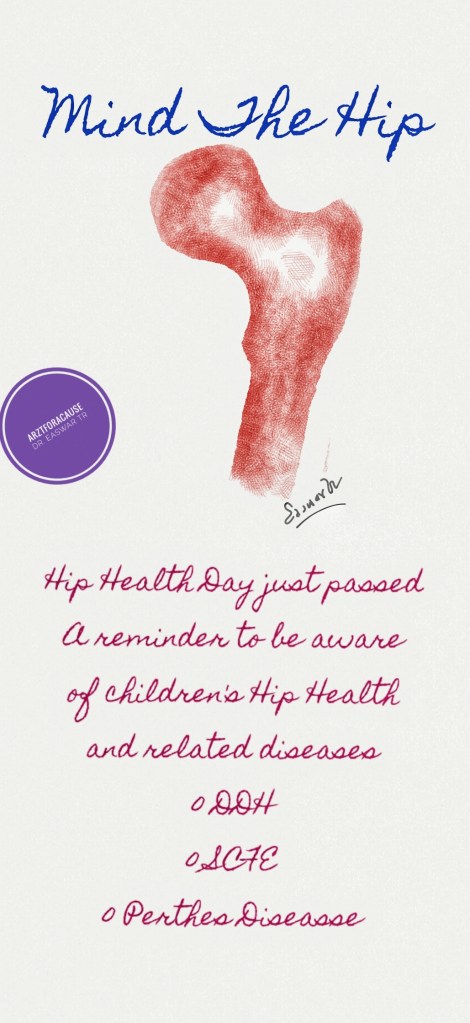
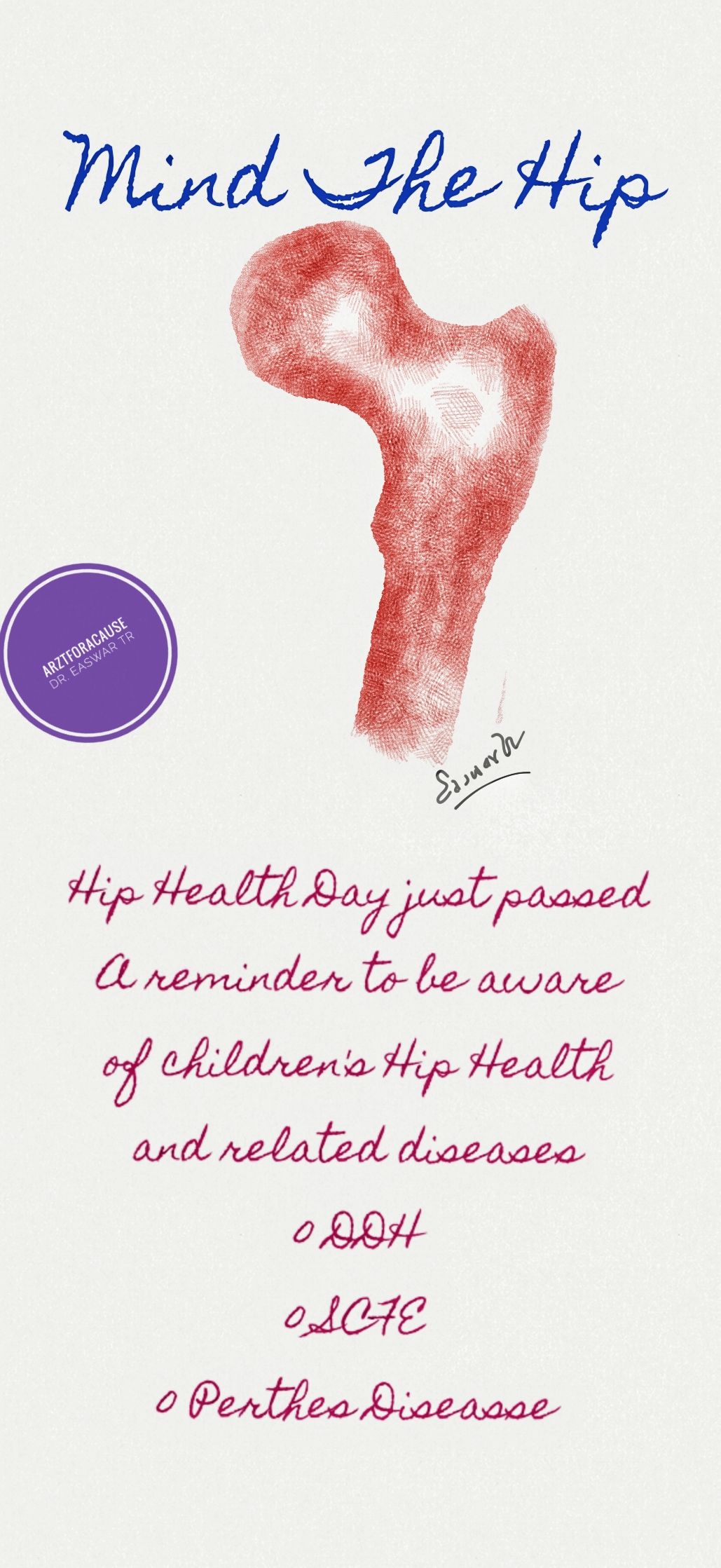
Hip Health Day in Children


#HipHealthDay just passed on June04.
A perfect time to remind ourselves if the importance of childs #hip #health and the common #diseases affecting childs hip joint.

1. #DDH
2. #SCFE
3. Perthes Disease
4. #CerebralPalsy

Child hip health starts from the time a child is born. It is important to have your pediatrician examine you newborn to make sure the childs hip has no obvious signs of dislocation. This condition is called DDH and is often missed in newborn period. It’s easiest to treat early and is the cause of significant difficulty to the child later if undetected.


In the newborn period it’s very easy and reassuring to do an ultrasound screening of the hips to rule out a hip dislocation or a more subtle variation called ‘dysplasia’ which is not possible to pick up via examination.

In older children hip disease usually has pain or limp. Be very suspicious if your child has a limp without a fall to account for it. Don’t ignore pain around the hip, thigh or knee. It is important to be aware that the child may have pain in the knee or thigh instead of the hip in hip joint problems

If the child is walking with a limp, if you feel that the child has a difference between the limb lengths or swaying from side to side it may be an indication of a hip problem.

Don’t hesitate to consult your #pediatric #orthopedic #surgeon

So , Mind the #Hip !

– Dr. Easwar Tr .
Paediatric Orthopedic Surgeon
Baby Memorial Hospital , Kozhikode Kerala

#Art
#ArztForACause
#orthopedics

Hip Health Day – Mind the Hip !
Categories
ddh Deformity Correction and Limb lengthening Pediatric Orthopedics

DDH Revision Surgery – The Arthrogram Advantage


DDH is a challenging Pediatric Orthopedic problem. The earlier the treatment is started better the result generally..

In many cases even with early care and even surgery the hip still tends to deviate away from acetabulum. This results in persistent Dysplasia.

When we attempt reconstruction one of the problems we face is whether to do the osteotomy of femur and acetabulum or wait and watch for acetabulum to remodel when child is young.

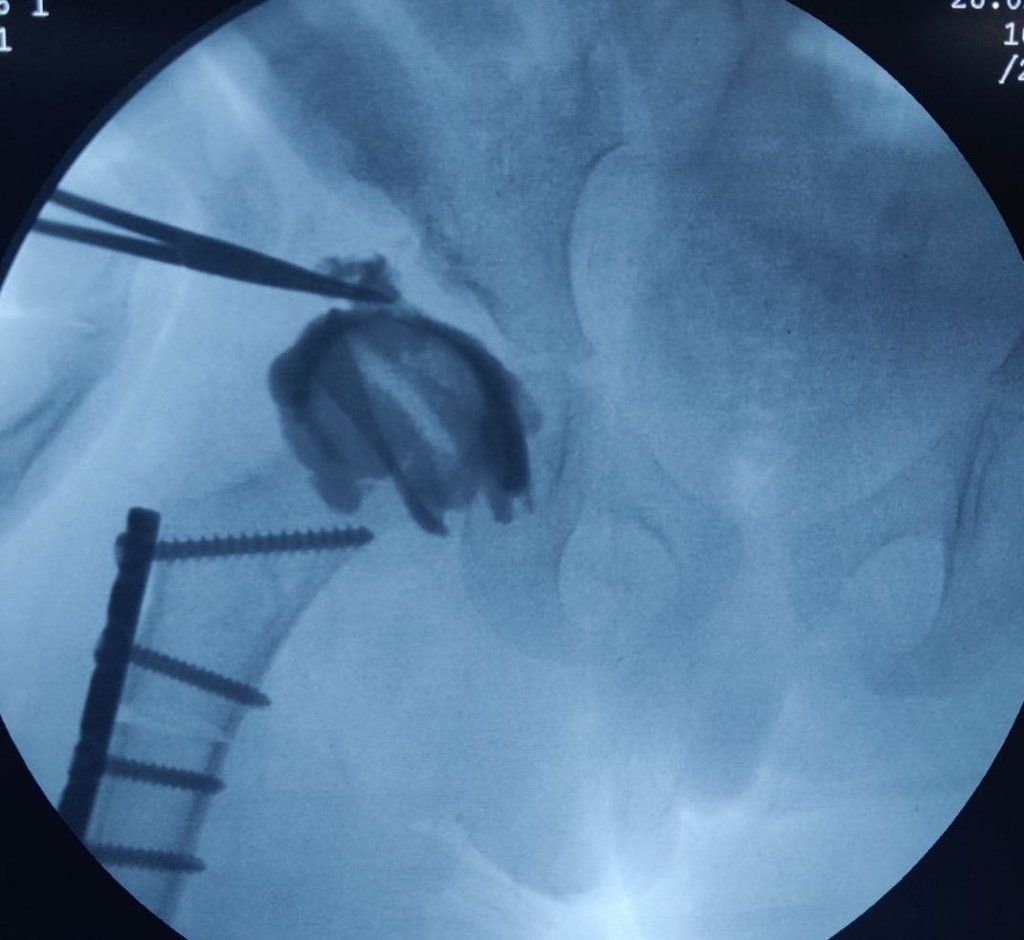
Arthrogram is an excellent tool to evaluate the state of cartilage over the lateral aspect and superolateral aspect of femoral head and then decide whether we want to do the acetabular osteotomy at the same sitting or defer it.

Illustrating below a case whether the Derotation osteotomy was done first and the we decided the acetabular osteotomy based on the cartilage cover on arthrogram.

This is useful in a child younger than 2 and half years as acetabulum has good remodelling potential at that age. In older children we will need to combine the procedures.

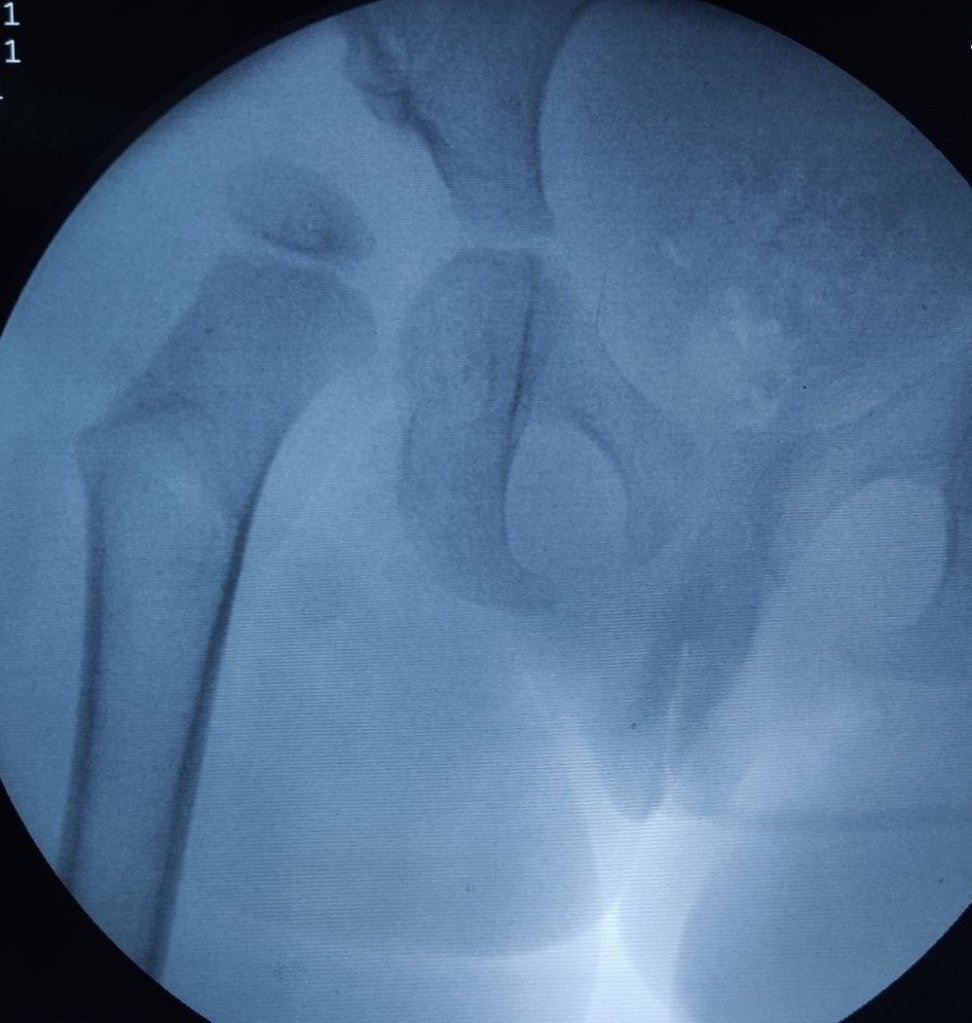
The state of hip before the osteotomy. Open reduction was done elsewhere about a year ago. Persistent hip dysplasia was observed.
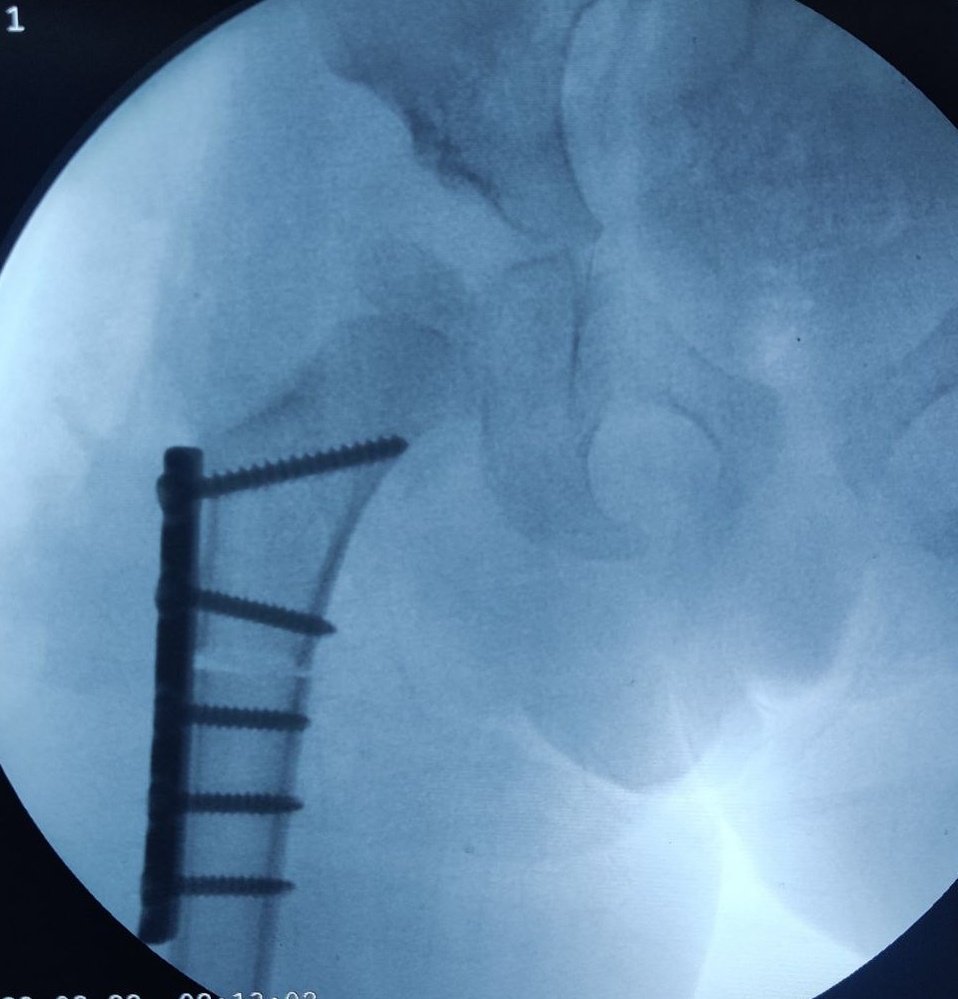
The Derotation osteotomy improved the coverage but we still have to decide about the acetabular procedure.
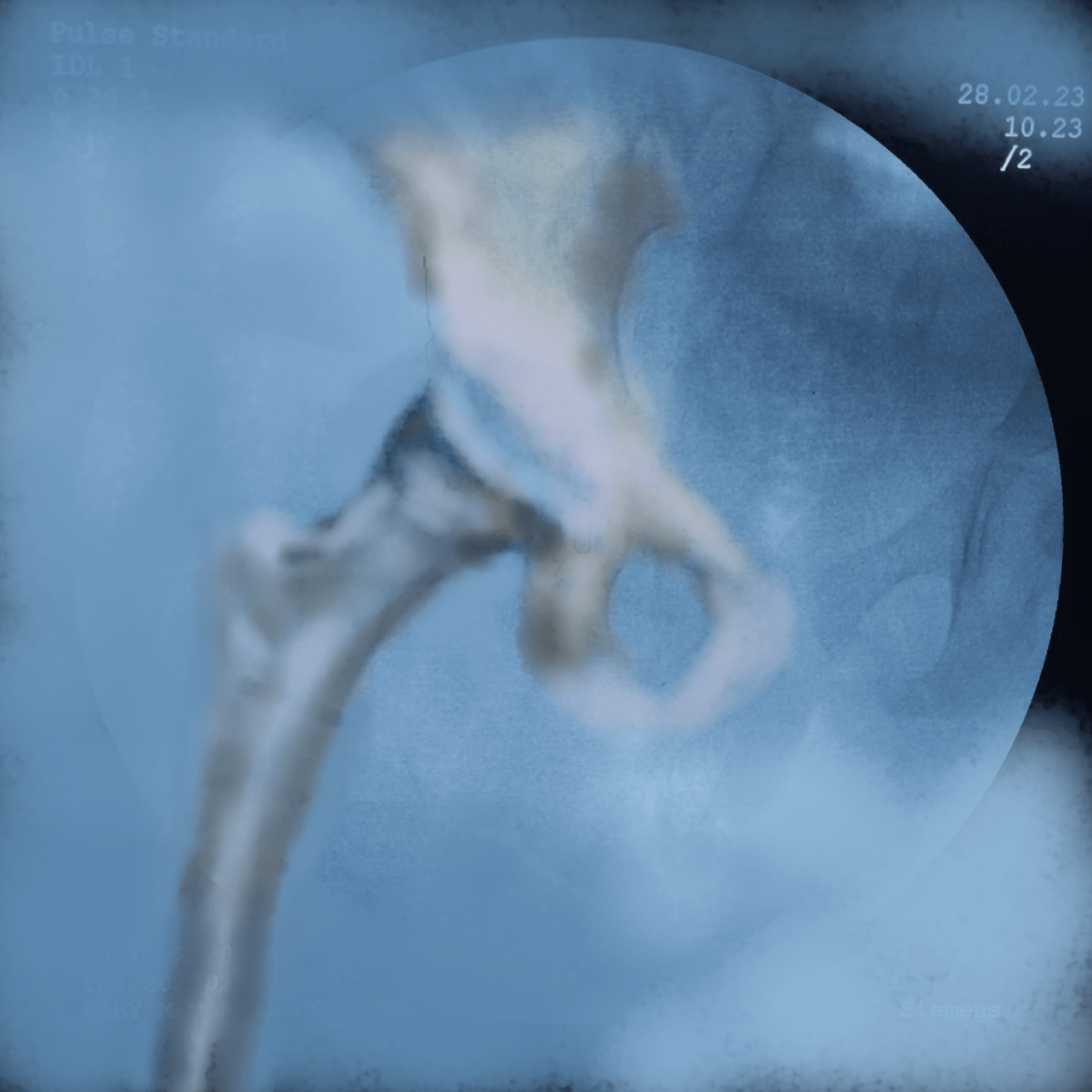
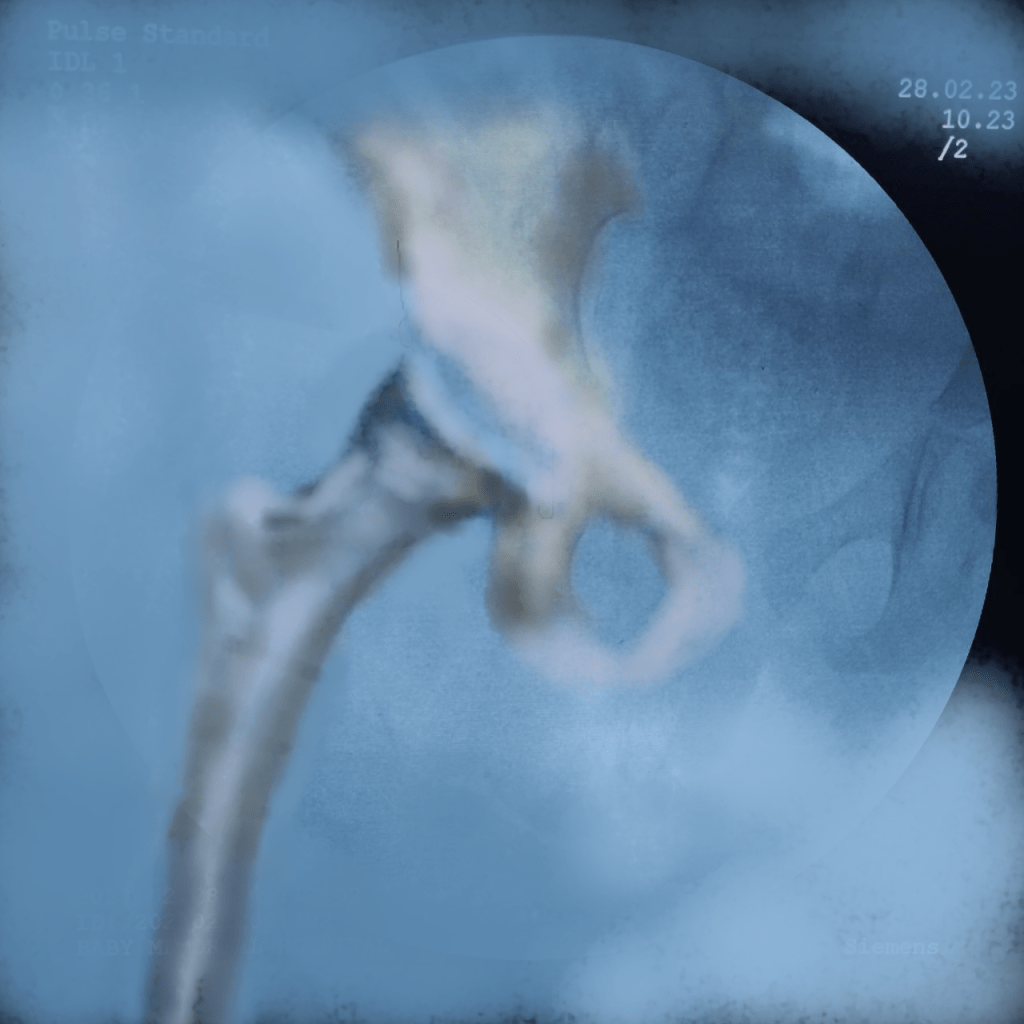
An arthrogram reveals a large cartilage cover on superolateral acetabulum. The cartilage bump is pointed to by the forceps.
The C Arm image is superimposed and an artist’s impression is drawn showing what the cartilage would look like in 3D. This offers an excellent teaching tool and a 3D orientation for young surgeons and pediatric orthopedic trainees to decide whether an acetabular osteotomy is needed

The surgeon would then discuss with parents and opt to continue an acetabular procedure of take a staged approach