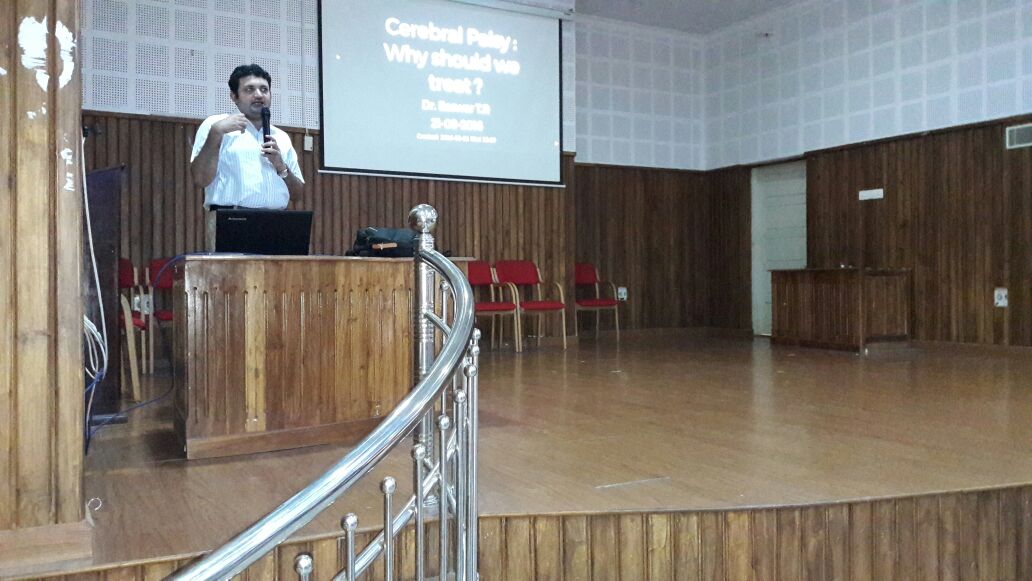
Dr. Easwar T R addressing the parents on care giving in Cerebral Palsy and treatment options
It was a wonderful experience to be part of the team that organised #WorldCerebralPalsyDay event to bring parents, children, caregivers, NGOs, Doctors, Therapists, Counsellors together for a day and have fun and enrich themselves.
The event was organised by Lifecare #Physiotherapy Centre, #Palakkad, Kerala along with #Sevabharathi, #Kerala at Thrupthi Hall in the centre of town.
The choice of centre was superb as it was right in centre of town allowing easy transit for children coming in from rural areas and those with limited mobility.
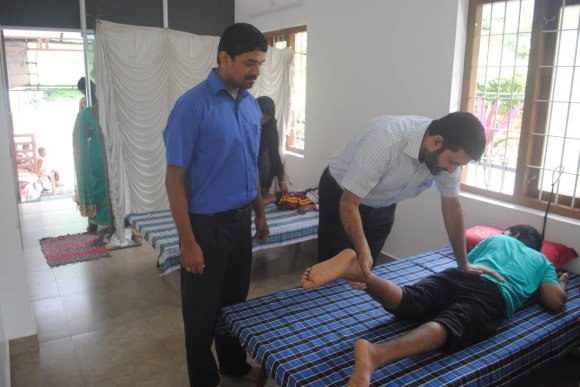
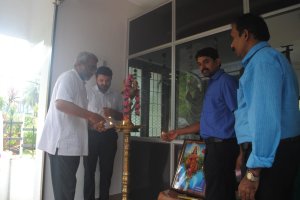
We assembled at the centre around 10 am and crowd had already trickled in at that time. In another hour about 40 children, parents, caregivers and health care professionals had assembled. The inauguration was a minimal affair with Dr. Sreeram Shankar starting the welcome address with respects paid to the almighty and the parents who had taken time to get here. This was followed by a medical camp by me, a painting competition and a singing competition for the children. There was a talk after that by Dr. Deepa, Psychaitrist, District Hospital, Palakkad which was followed by my parental awareness on treating #CerebralPalsy children.
Cerebral Palsy Event inaugural address by Mr. Kalyanaraman, Palakkad, Sevabharathi
It was a red-alert day in many places for #Kerala because of fear of inclement weather. However, rain stayed away largely apart from slight drizzle. That was a relief.
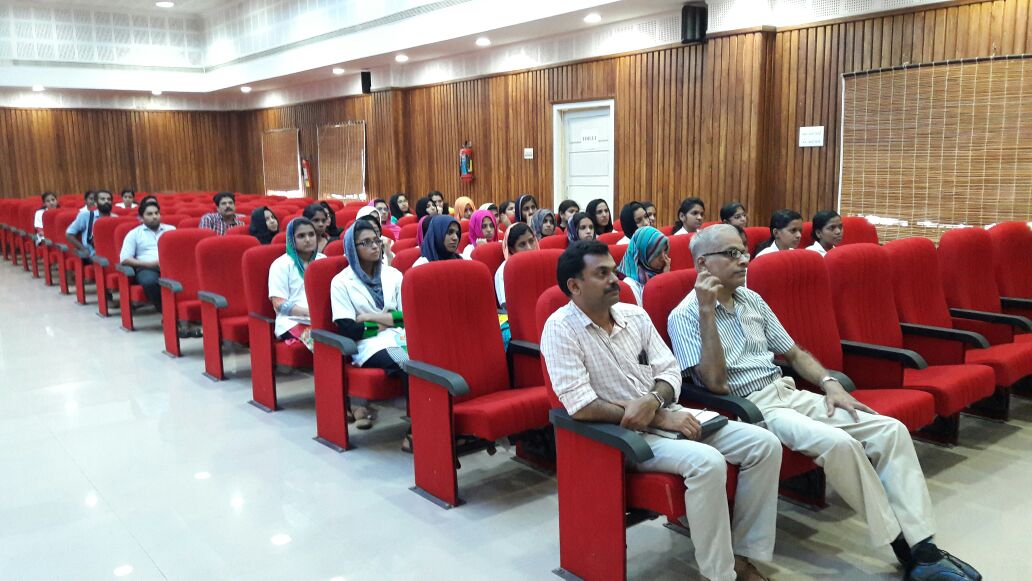
Parental counselling on treatment options in cerebral palsy
Painting Competition for Children
Dr. Easwar T R addressing the parents on care giving in Cerebral Palsy and treatment options
Adult Cerebral Palsy is becoming a major issue. I was surprised that patients had pertinent questions on that topic.
Dr. Sreeram Shankar Inaugural address
Dr. Sreeram Shankar Inaugural address
Adult Cerebral Palsy is becoming a major issue. I was surprised that patients had pertinent questions on that topic.
Dr. Easwar T R addressing the parents on care giving in Cerebral Palsy and treatment options
Painting Competition for Children
Parental counselling on treatment options in cerebral palsy
About 40 children took part in the celebrations, competitions, talks and counselling sessions. It was well appreciated by all, many who are experiencing this for the first time.
Positive vibes which would rub off into the child’s care was the key. Parents took strength from one another and participated in the awareness session. Many misconceptions about Cerebral Palsy, Seizure Disorder, Autism, Global Developmental Delay were cleared.
We are planning sessions throughout this month and hopefully improve the quality and participation of these events in the next iteration.
#IFSBHCON2018
#SPINABIFIDA
#hydrocephalus
#spinabifidafoundation
Lovely conference and lovely to see the so many families and patients viewing life with such a positive attitude https://t.co/eXqZWmuhoa
Dr. Santhosh Karmakar and Spina Bifida Foundation deserve credit for bringing together different professionals -doctors, physiotherapists and families, together for this event
Had a wonderful #CerebralPalsy and #PediatricOrtho #medical #camp at #Palakkad #Kerala organised by wonderful people at #SevaBharathi . It was well attended with parents and children braving the heavy rain.
@sevakeralam
@sevabharathitn https://t.co/Z3FT9C6RVO
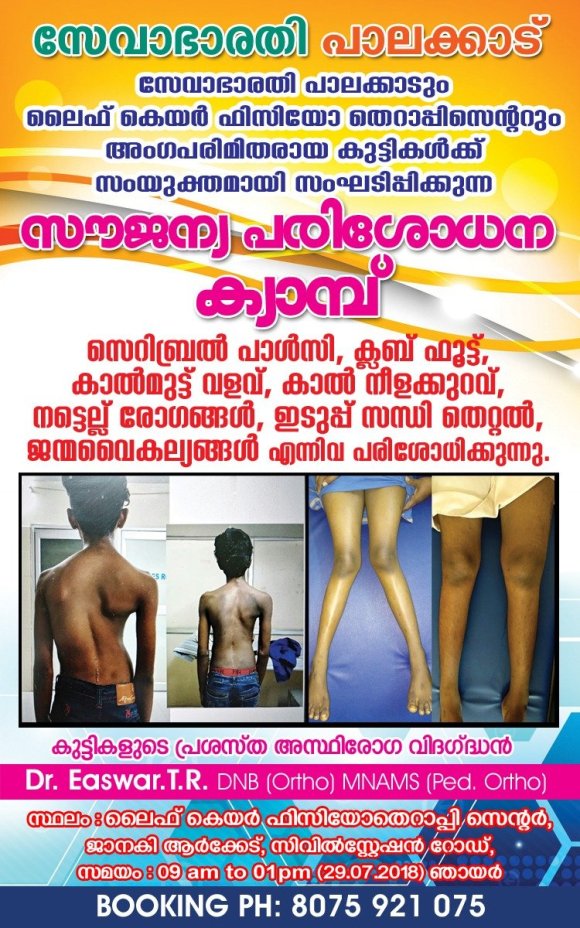
I’m conducting a free medical camp for #Childrens #Orthopedic #Disorders and #BoneDiseases , #LimbDeformities and #CerebralPalsy at #Palakkad ,#Kerala . Event is organised by #SevaBharathi .
The event will be held in the premises of Life Care Cerebral Palsy Clinic which is in centre of Palakkad town enabling easy transport to the venue.
Patients and relatives are advised to bring all old records while seeking opinion. All old x-ray, other scans and will also be needed for evaluation.
Phone number for Booking :+91-80759-21075
Contact the phone on last line of notice for appointment.
(Notice is in #Malayalam, local language of Kerala )
Developmental Dysplasia of Hip - Left hip is dislocated
DDH otherwise called Developmental Dysplasia of Hip is a condition where the ‘ball-and-socket-joint’ of the hip is not formed well at birth. It used to be called Congenital Dislocation of Hip.
The child is born with a slightly misfitting hip joint where the ball is slightly shifted out of cup or a hip joint where the ball is completely outside the cup and cup is also very shallow. This can occur on one side or both sides.
Developmental Dysplasia of Hip – Left hip is dislocated
Why does it happen ?
Most times its ‘Idiopathic’ , a medical term which means – cause is not known. In many other patients, the child will be having one of the syndromes (a group of clinical features and disorders in other organs systems and external appearance) or neurological issues in the spine (like meningomyelocele) that also causes this. This second group is sometimes medically referred to as Teratogenic DDH and is much more difficult to treat.
We will discuss below the aspects as related to Idiopathic DDH. They don’t apply to Teratogenic or Neurological DDH.
How do we know the child has DDH ?
Most newborn screening procedures at the hospitals have doctors checking to see if the new born child has clinical signs of DDH. It is easiest to detect and treat it at that early stage.
Once a clinical suspicion of DDH is there the Neonatologist usually refers the child to a Pediatric Orthopedic Surgeon. In addition to establishing the clinical diagnosis by physical examination, the doctor will order an x-ray and an Ultrasound Scan of the Hips to check the dislocated hips. Several measurements need to be taken and ease of dislocation need to be established under Ultrasound scan by a procedure called Dynamic -Ultrasound. The treatment starts after these are done.
In many children, the initial diagnosis may not be made in the immediate post-delivery period. Children may be brought to the OPD by parents with complaints that the thigh skin fold dont look symmetrical and the hips don’t open out fully for parents to change diapers.
In older children parents may notice a limp when the child walks or a limb length difference may also be noted with the dislocated side being shorter.
Limb Lengths may be noted to be different in DDH when child is older and walking. The limb with the dislocated hip will appear shorter.
How soon should the treatment start ?
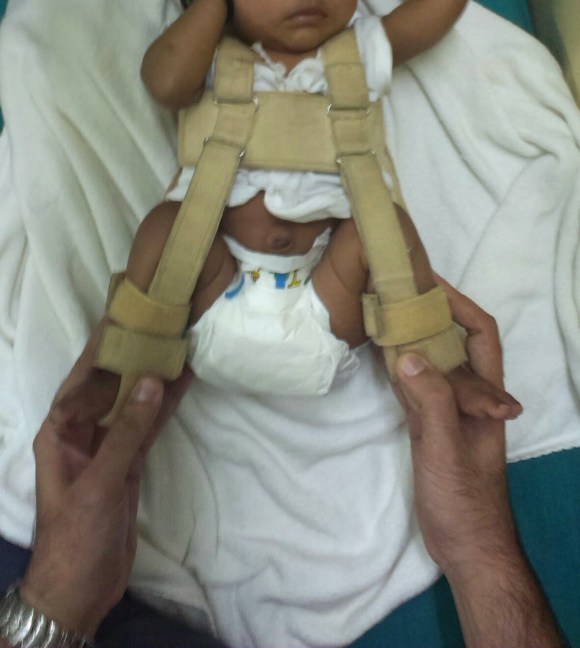
As described in previous section, treatment should ideally start in neonatal period once the problem has been detected. After clinical examination and Ultrasound examination, your doctor will suggest usually a belt type device called Pavlik Harness to be applied on the child to keep the hip reduced inside the cup. This harness is to be worn full time. Parents are counselled on how this is applied and how the straps are tightened.
Ultrasound exam for a child with Hip and Knee dislocation
Once this harness has been applied, the hips are scanned with Ultrasound every 2 weeks to check for improvements. Ideally this has to be kept for about 3 months and taken off after the hip stabilizes inside the socket. A slow weaning period is there before the child can be fully taken off the Pavlik Harness. This is to ensure that the Ball ( head of femur ) stabilizes inside the socket (Acetabulum of Pelvis) and the hip is stable. The tissues around the hip also has to shrink and adapt to the new location of Head of Femur. Otherwise re-dislocation or partial slip (medically called subluxation) is a possibility.
In many cases the parents may not be willing for a device to be applied on the child full time post-delivery or the DDH itself may go undetected. This child eventually may be brought later in life by the parents with complaints necessitating surgical procedures.
What is the treatment options for DDH?
As previously described if the newborn is detected to have DDH the treatment is to apply Pavlik harness on the child after Ultrasound exam proves hip is reducible and stable in what is called a safe zone. Safe Zone is a zone where the position in which the harness has to be applied to the child does not compromise the blood supply the head of femur. This is very important decision to make.
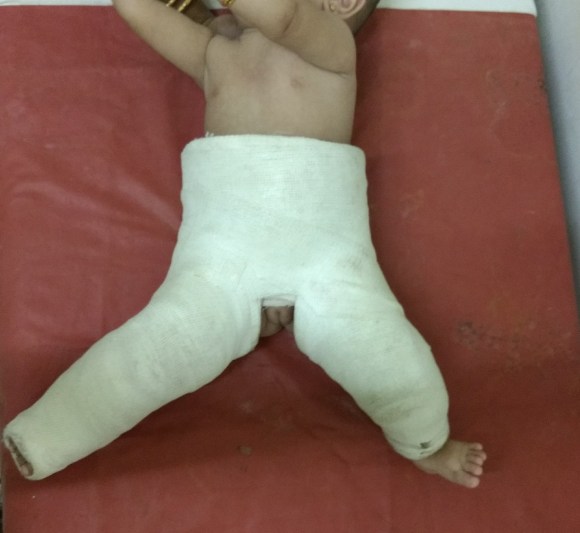
Pavlik Harness for DDH hip needs to be fitted properlyHip Spica Plaster in child with DDH
Application of Hip Spica under anesthesia in DDH
If the child is brought later in life, before 1 year, the hip has to be checked for reducibility as the tissues around the hip would have become contracted and sometimes it is difficult to reduce the hip back into the socket. Usually anaesthesia would be required and the hip once reduced back into the socket is held there by application of the plaster of paris or POP called Hip Spica. This is kept for approximately 3 months until the hip has stabilised inside. A CT scan to verify whether the hip is reduced should be done while child is in POP as slippage of the hip socket is also seen when POP cast becomes loose with time.
Surgery is the only option in older children with DDH. These range from relatively simple procedures to complex hip reconstruction procedures depending on age of the child, slope of cup, angle of rotation of the neck of the thigh bone and shape of the head. These are best evaluated as per the needs of the child.
Arthrogram for DDH
Generally these surgical procedures can be grouped into a few types :
Open Reduction of Hip and Capsulorraphy (medical term meaning stitching up of capsuleor the covering around the joint)
This is basic necessity. Here the hip is reduced back into the socket and the covering, the capsule, which is loose is tightened with several sutures
Femur Derotation Osteotomy with shortening
This would involve a slight shortening of the hip bone and turning it around. The bone would then be stabilied with a metal plate and screws
The need for your child to have this done depends on the age of the child and the angle of the ‘neck of the femur’, something medically known as Anteversion. This procedure essentially de-rotates the femur neck and allows the head of femur (the Ball) to deeply sit inside the Acetabulum (the socket). A slight shortening of the thigh bone may be needed as the child , if old enough, would have developed tightness of the tissues and hip should be sitting inside the socket slightly loose than in tension.
Acetabular Osteotomy
In many children, when they present to the clinic their Acetabulum would be shallow and not deep enough to receive the Head of Femur. In such children deepening of the Acetabulum by a surgical procedure called Osteotomy (a type called Salter Osteotomy being the most popular) may be done.
The above procedures may be combined along with Open Reduction as the surgeon sees fit after evaulating the child. These options and its pros-and-cons would be discussed with the parents before the surgery.
What happens if we don’t treat DDH promptly ?
Best time to treat the child is in the newborn period. With time the tissues around the hip gets tighter and the bone structure of thigh bone and pelvis alters since the normal growth with moulding of the ball being inside the cup doesn’t happen.
This lack of moulding results in a shallow cup. Additionally the thigh bone’s upper end would be twisted out of shape and the ball also would be misshapen since it has not been moulded by the acetabulum.
All these result in a much more complex procedure to try and restore the hip.
Left untreated DDH causes osteoarthritis or the Hip joint and Hip pain in early adulthood often requiring complex reconstructive procedures.
It is best if the treatment is not postponed and done at the earliest.
Hip Dysplasia Awareness Month – June !!
The Hip Dysplasia Awareness Month of June is to educate parents on Hip Dysplasia and its treatment methods. We hope that parents would bring children to care centers at the earliest if suspicion of hip dysplasia is there.
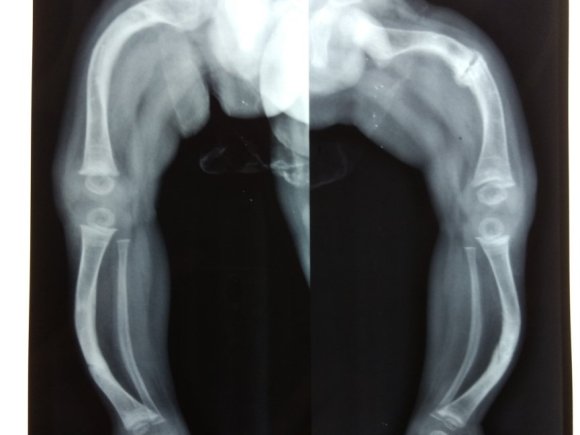
Osteogenesis Imperfecta is a congenital disorder of bones that has varied types and presentations. Severity varies based on the type of the genetic mutation that causes this disorder.
Regardless of the type the genetic modification cause malformed and weak bones and in some cases malformed teeth. Bone bend and deform or break easily and heals in deformed position. This results in cosmetic deformity along with issues with walking , standing for the child.
The bend of the bone if significant can cause repeated fractures either due to poor handling by caretakers or when child tries to bear weight and stand up.
Fortunately for the milder variants there’s are medications to make bones stronger and surgery to straighten bent bones. This allows child with help of walking aids and/or splints to ambulate.
For the very severe variants unfortunately clinical breakthrough is still awaited.
#Torticollis or #WryNeck is a common complaint in #children.
Children will keep neck turned and/or tilted to one side. This can be a sudden occurrence especially after sore throat or upper airway infection, fall or maybe seen after difficult birth due to stretching and injury to the neck muscle (called Sternocleidomastoid .
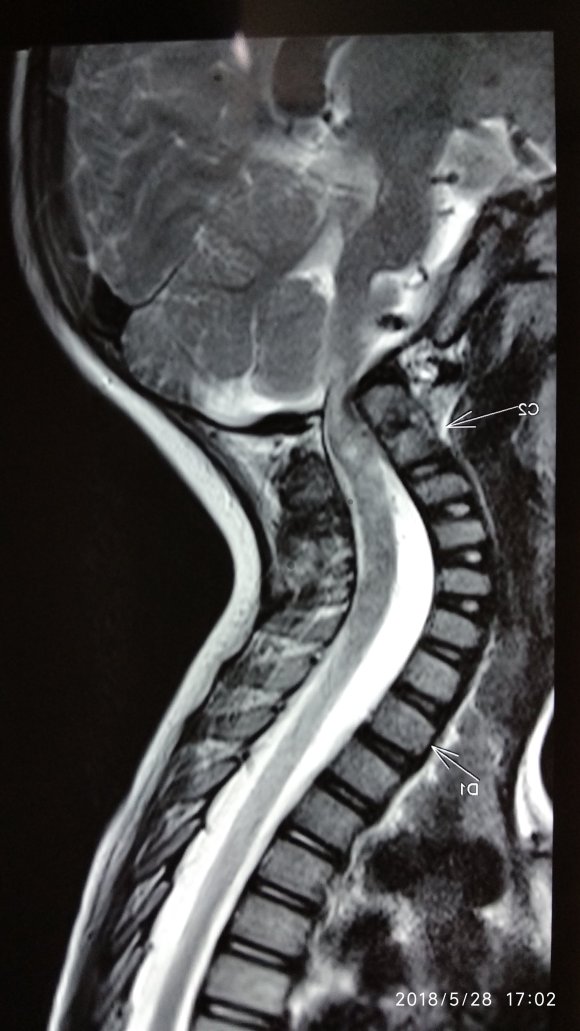
While many are simple spam or contracture of neck muscle some torticollis as shown in the picture below could harbour problems like compression of #spinalcord by #neck bones which have gone off alignment. These problems in the structure of neck bones occur at birth and are due to a developmental error in the shape of the neck vertebra.
A free medical camp for underpriviliged children suffering from Cerebral Palsy and Pediatric Orthopaedic disorders was organised by Dr. Easwar T.R and the administrative team at ICCONS, Shoranur, Kerala on 24th, May,2018.
A gamut of problems commonly seen in children with Cerebral Palsy was observed in OPD. While some parents had the good fortune of seeking medical care and intervention early in course of disease and others were not so fortunate. Lack of parental knowledge, distance / accessible care, financial cruch, normal siblings to care for and single parent challenges were the most important issues observed on casual data collection.
The medical camp was followed by an awareness class for parents, therapists and other care givers by Dr. Easwar T.R on the various aspects of Cerebral Palsy.
Custom wheel chair and mobility solutions for needy patients was discussed with Physiotherapists and low cost solutions for the same identified. Mobility solutions continue to be a major challenge for children in rural areas with poor roads, small homes with narrow doors and steps inside homes especially with outdoor toilets.
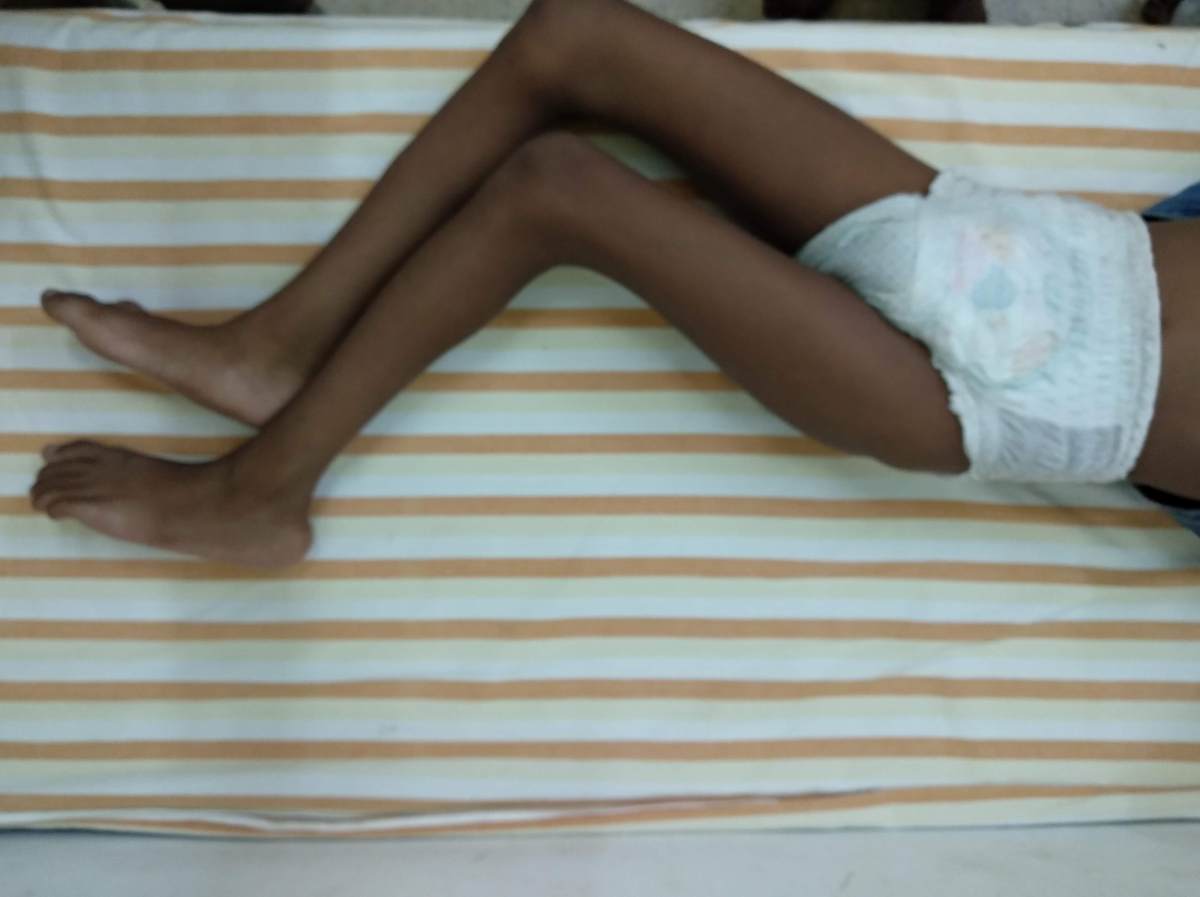
Flat foot in Cerebral Palsy
Cerebral Palsy child with widestance and flat foot
Cerebral palsy awareness lecture for paramedical personnel at ICCONS
At ICCONS, where we have been successfully treating cerebral palsy children for over 10 years, rehabilitating them to achieve goals. It is so important to maintain the momentum of care across all departments.
Paramedical training ( physiotherapists, occupational therapists, orthotists, speech therapists, behavioral therapists, clinical psychologists, nursing team, social workers ) in cerebral palsy care, handling, treatment options and outcomes gives all those who are involved in the care of these children hope for the future. It also helps them prime parents towards realistic goals; both long and short term. The end result is a comprehensive care for these children with cerebral palsy.
Frequent lectures are so important to keep up the spirit among team members and orienting new employees.
A recent talk i gave at Pediatric Orthopedic & Cerebral Palsy Clinic, ICCONS, Kerala preceding the World Health Day , 2017
Cerebral palsy awareness lecture for paramedical personnel at ICCONS












 Dr. Easwar T.R